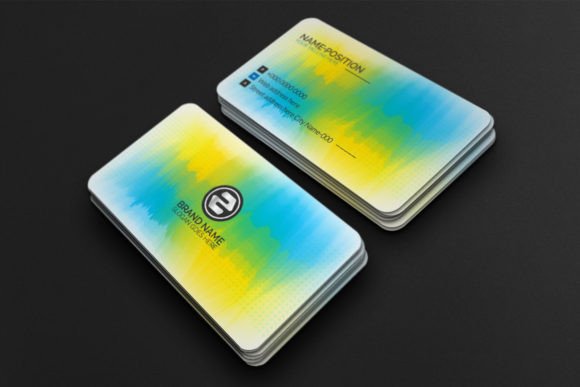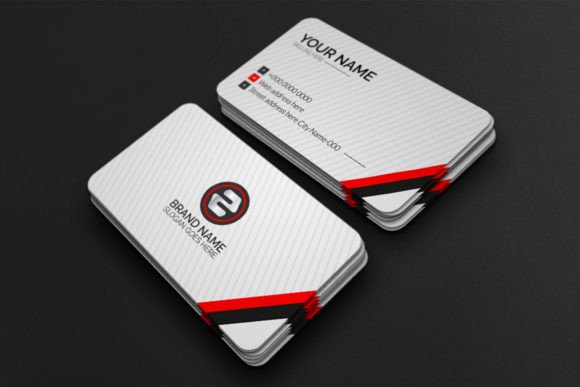
Redefining First Impressions: The Strategic Power of a Fully Customizable Personal Visiting Card
In an era where digital networking platforms like LinkedIn and X (formerly Twitter) dominate professional interactions, the physical exchange of identity remains a potent ritual. However, the expectations surrounding this ritual have shifted dramatically. It is no longer sufficient to simply possess a name and a phone number printed on a piece of cardstock. Today, professionals, creators, entrepreneurs, and marketers are seeking tools that allow for immediate, high-fidelity self-expression. Enter the modern Personal Visiting Card, specifically designed as a fully customizable template compatible with industry-standard software like Adobe Photoshop and Adobe Illustrator.
This shift represents more than just a change in graphic design preferences; it reflects a broader trend in personal branding where agility, aesthetic precision, and technical versatility are paramount. For the freelance consultant or the startup founder, the ability to tweak a design overnight to match a new campaign or rebrand is not a luxury—it is a necessity. This article explores why the demand for editable, vector-based, and professionally structured business card templates is surging, and how these specific technical features translate into tangible professional advantages.
The Evolution of Professional Identity Materials
Historically, business cards were static artifacts. Once ordered from a printer, they were immutable until the next print run. This rigidity was manageable when brand identities changed slowly. In today’s hyper-accelerated market, however, brand narratives evolve weekly, if not daily. A marketing agency might pivot its visual language based on client feedback, or a freelancer might update their portfolio to highlight a new specialization. The traditional model of ordering 500 identical cards creates waste and obsolescence.
The solution lies in the democratization of design through accessible, high-quality templates. A Personal Visiting Card that comes with source files allows the user to become the designer. This aligns with the "creator economy" movement, where individuals take ownership of their visual output. By utilizing a template that includes both AI (Illustrator) and PSD (Photoshop) files, users bridge the gap between typography-focused layout and raster-based image editing. This dual compatibility ensures that whether you are adjusting kerning on a headline or manipulating a complex background texture, you have the right tool for the job within the same ecosystem.
Bridging the Gap Between Design and Accessibility
One of the primary barriers to professional-grade design has been the learning curve associated with complex software. While many professionals are adept at using social media or email clients, few are trained in vector graphics. This is where the structural integrity of a well-made template becomes crucial. These templates are not merely images; they are engineered systems. They come pre-configured with paragraph styles, separate layers, and defined bleeds. This means that even a novice user can achieve results that rival those of a hired graphic designer by simply swapping text and images, rather than rebuilding the layout from scratch.
This accessibility fosters a sense of agency. When a marketer can instantly customize their own materials, the feedback loop between idea and execution shortens significantly. There is no waiting for an external vendor to make minor tweaks. This immediacy is critical in fast-paced industries where opportunities can vanish in hours, not days.
Technical Specifications as a Competitive Advantage
To understand why this specific type of Personal Visiting Card is gaining traction among enthusiasts and professionals alike, one must look beyond the aesthetics and examine the technical specifications. These details are often overlooked by consumers but are vital for ensuring the final product meets professional printing standards and maintains quality across various media.
CMYK Color and 300dpi Resolution
The distinction between RGB (Red, Green, Blue) and CMYK (Cyan, Magenta, Yellow, Key/Black) is fundamental in print production. Screens emit light, while printers use ink. Colors that appear vibrant on a monitor often look duller when printed unless converted correctly. A template that is natively set to CMYK Color ensures that what you see during the design process is accurate to the final print. Similarly, the requirement for 300dpi (dots per inch) resolution guarantees sharpness. Lower-resolution images result in pixelation, which undermines the perception of professionalism. By providing files pre-set to these standards, the template eliminates a common source of error and cost—rejection by professional printers due to file errors.
Vector Shapes and Resizability
A key feature highlighted in these templates is the inclusion of Vector shapes. Unlike raster images (JPEGs, PNGs), vectors are mathematical equations that define lines and curves. This makes them infinitely scalable without loss of quality. A logo or decorative element in a vector format can be resized from the size of a postage stamp to a billboard without becoming blurry or jagged. This Resizable card capability is particularly useful for designers who may need to adapt elements for different mediums, such as creating a matching letterhead or a social media banner using the same geometric assets. It ensures consistency across all touchpoints of a brand identity.
Precision Dimensions: 3.5×2 and 2×3.5 Inches
Standardization is essential for physical distribution. The dimensions of 3.5×2 inches (and its portrait counterpart, 2×3.5 inches) are the global standard for business cards. However, achieving perfect alignment requires careful attention to margins and safe zones. The inclusion of bleeds in the template files is critical. A bleed is the area outside the trim line that allows the background color or image to extend to the edge of the card after cutting. Without proper bleeds, white slivers can appear around the edges of the card if the cut is slightly off-center—a sign of amateurish production. By including these precise measurements and bleed settings, the template ensures that the final product looks polished and intentional.
Workflow Efficiency and File Organization
For creative professionals, time is the most valuable resource. The way files are organized within a download package can significantly impact workflow efficiency. The description of the included files reveals a sophisticated approach to user experience. The package is not a chaotic jumble of assets but a structured archive.
- Illustrator File Added: This serves as the master layout for vector elements and typography. It is ideal for clean, crisp designs that rely on shape and text.
- Photoshop File Added: This version caters to users who prefer working with pixels, perhaps for complex photo manipulations or textured backgrounds.
- Vector EPS File Added: EPS (Encapsulated PostScript) files are widely compatible with various design and publishing software. Including this file ensures that the core vector graphics can be used in applications other than Adobe Creative Cloud, broadening the template's utility.
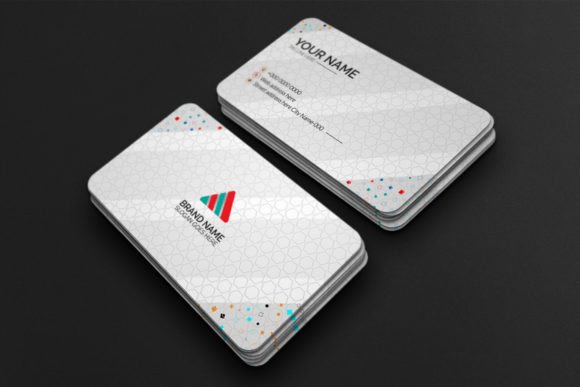
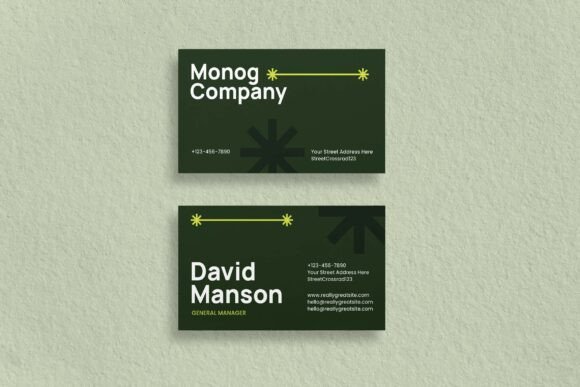
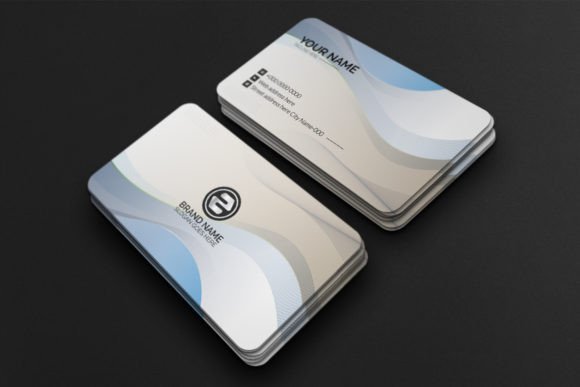
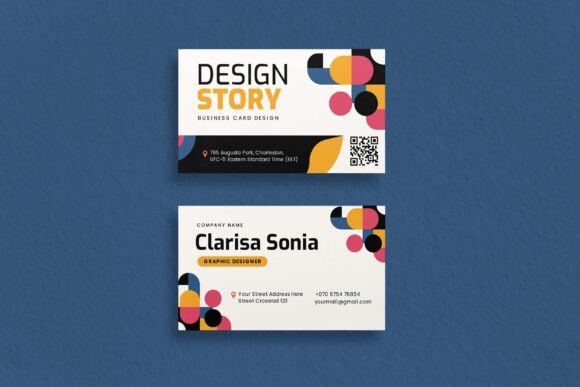
- JPG file 3 separated files: Providing flattened JPG previews allows users to quickly visualize the final output without opening heavy source files. Separating front and back views aids in quick review processes.
This comprehensive suite of formats supports a flexible workflow. A designer might start in Illustrator to establish the grid and typography, move to Photoshop to refine photographic elements, and export to EPS for sharing with collaborators who use different software. This interoperability reduces friction and enhances collaboration.
The Role of Typography and Free Fonts
Typography is the voice of visual design. The choice of font can convey authority, creativity, warmth, or minimalism. Many premium templates lock fonts behind expensive licenses, creating legal risks for users who distribute the cards commercially. The mention of Free Font use and links to the free fonts in the template is a significant value proposition. It removes legal ambiguity and financial burden. Users can confidently use the designated typefaces, knowing they are licensed for personal and commercial use. Furthermore, having direct links to the fonts streamlines the setup process, preventing the common frustration of missing fonts causing layout shifts.
The inclusion of paragraph styles further enhances typographic control. Paragraph styles are predefined sets of formatting options (font family, size, leading, tracking, color). Applying a paragraph style ensures consistency across all text elements. If a user decides to change the heading font, applying the updated style updates every instance of that heading instantly. This feature is indispensable for maintaining a cohesive look, especially in multi-page documents or complex layouts.
Easy Editable and Easy Customize
The descriptors Easy editable and Easy Customize are not just marketing buzzwords; they reflect the underlying architecture of the files. Well-organized templates use smart objects in Photoshop and grouped layers in Illustrator. Smart objects allow users to replace images while retaining filters and transformations applied to them. Grouped layers keep related elements together, making selection and manipulation intuitive. This level of organization respects the user’s time and cognitive load, allowing them to focus on content rather than fighting the software.
Conclusion: Investing in Professional Presence
The market for professional identity materials is evolving from a transactional exchange of information to a strategic exercise in brand building. A Personal Visiting Card is no longer just a contact repository; it is a tactile extension of one’s digital persona. In a crowded marketplace, standing out requires more than just good content; it requires exceptional presentation.
By choosing a template that offers full customization, technical precision (CMYK, 300dpi, bleeds), and versatile file formats (AI, PSD, EPS), professionals empower themselves to maintain a consistent, high-quality brand image. This approach aligns with the modern expectation of agility and excellence. Whether you are a freelancer pitching to a new client, an entrepreneur launching a product, or a marketer attending a conference, the quality of your physical collateral speaks volumes about your attention to detail. In a world saturated with digital noise, a beautifully crafted, perfectly printed business card remains a powerful tool for connection. Leveraging the capabilities of these advanced templates ensures that your first impression is not just memorable, but professionally impeccable.
As we move forward, the integration of design technology with personal branding will only deepen. Those who embrace tools that offer flexibility, precision, and ease of use will find themselves better equipped to navigate the complexities of modern professional life. The Personal Visiting Card, in its most evolved form, is a testament to this shift—a simple object, yet a complex vessel for professional ambition.