Evaluating the Gear Photo Space Business Card for Modern Professional Branding
In an era where first impressions are formed in a fraction of a second, the physical business card remains a critical touchpoint for professional networking. While digital contact sharing has surged, tangible assets still convey stability and attention to detail. Among the myriad design options available, the Gear Photo Space Business Card stands out as a specialized tool for industries rooted in mechanics, engineering, technology, and industrial services. This template is not merely a decorative choice; it is a strategic communication device designed to bridge the gap between technical precision and personal identity.
This analysis explores the specific attributes of the Gear Photo Space Business Card, examining its design philosophy, technical specifications, and suitability for various professional contexts. By understanding its strengths and limitations, professionals can determine whether this horizontal, gear-themed layout aligns with their brand objectives or if a different approach might serve them better.
Design Philosophy: Merging Mechanism with Identity
The core appeal of the Gear Photo Space Business Card lies in its thematic coherence. For professionals whose work involves precision, repair, or complex systems—such as automotive technicians, HVAC specialists, mechanical engineers, or IT hardware experts—the visual language must reflect accuracy and functionality. The template utilizes a horizontal layout, which offers a wider canvas for information hierarchy compared to traditional vertical cards. This orientation allows for a more spacious arrangement of text and graphics, reducing visual clutter.
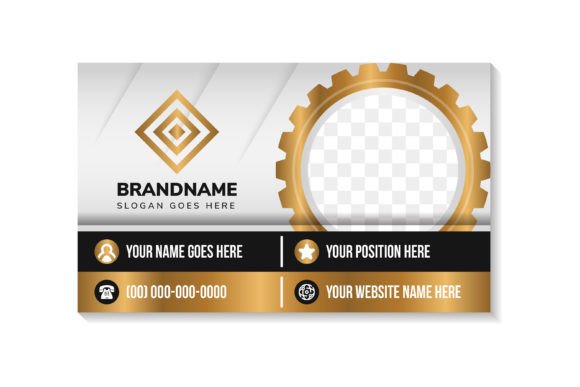
The central design element is the integration of gear shapes that frame or interact with a dedicated photo space. This "photo space" is crucial. Unlike abstract templates that rely solely on typography, this design invites the inclusion of a professional headshot. In service-based industries, seeing the face of the technician builds immediate trust. The gears surrounding or integrating with this photo space act as a metaphor: the individual is the central component that drives the mechanism of the business. It suggests that while the tools and technology are important, the human expertise is the driving force.
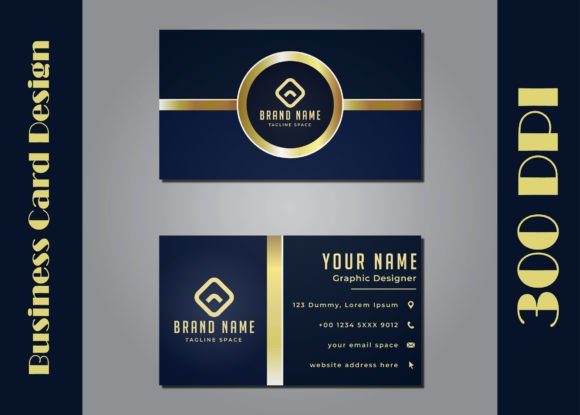
The color palette typically employed in this design features a combination of black, gold, and grey gradients. Black provides a sense of authority and sleekness, often associated with high-end technology and luxury. Gold accents introduce a layer of prestige and quality, suggesting that the services offered are premium. Grey gradients add depth and modernity, preventing the design from feeling flat or dated. When combined with shadow effects, these elements create a three-dimensional feel, enhancing the perception of value and craftsmanship.
Technical Specifications and Editability
For designers and business owners who require customization, the technical foundation of the Gear Photo Space Business Card is robust. The file is provided in high-resolution formats, specifically at 300 DPI, which is the industry standard for print production. This ensures that when the card is printed, the images remain crisp, and the gradients do not pixelate or banding occurs.
A significant advantage of this template is its vector-based nature. All graphics are 100% vector, meaning they can be scaled to any size without loss of quality. This is particularly beneficial for businesses that may need to adapt their branding across different media, from small business cards to larger banners or vehicle wraps. The source files are typically available in Adobe Illustrator (.Ai) and Encapsulated PostScript (.EPS) formats, alongside raster versions like .JPG and .SVG. This multi-format support caters to both professional designers working in vector software and general users who may prefer simpler editing tools.
The template is well-organized, with clearly labeled layers for text, shapes, and colors. This structure makes it accessible even to those with intermediate design skills. Users can easily swap out the gear motifs, adjust the gradient stops, or modify the typography to match their specific corporate identity guidelines. The editable text fields allow for quick updates to names, titles, and contact information, streamlining the reordering process. However, achieving the full aesthetic potential requires some familiarity with design software to manipulate the shadows and alignment effectively.
Comparative Analysis: Horizontal vs. Vertical Layouts
When evaluating business card designs, one of the first decisions is the orientation. The Gear Photo Space Business Card adopts a horizontal layout, which presents distinct advantages and tradeoffs compared to the more common vertical format.
Advantages of Horizontal Layout:
- Information Hierarchy: Horizontal cards naturally guide the eye from left to right, mimicking the reading pattern. This can make scanning contact information faster and more intuitive.
- Photo Integration: As seen in this template, horizontal layouts provide ample width for landscape-oriented photos or wide graphic elements, such as the gear mechanisms. This creates a more balanced composition for profile-centric designs.
- Modern Aesthetic: Horizontal cards are often perceived as more contemporary and minimalist, distinguishing themselves from the sea of vertical cards in a networking pile.
Considerations:
- Pocket Fit: While most modern suit pockets accommodate horizontal cards, some older or tighter-fitting pockets may find them slightly bulkier or harder to slide in smoothly.
- Digital Storage: In digital contact apps, horizontal images may sometimes be cropped differently depending on the user's interface settings, though this is a minor inconvenience.
Compared to purely typographic business cards, the Gear Photo Space option adds visual weight. This is a double-edged sword. It makes the card memorable and distinctive, but it also leaves less negative space. For individuals who prefer a minimalistic, understated approach, this design might feel too busy. Conversely, for those in creative or industrial fields, the lack of white space is often viewed as a sign of richness and detail.
Suitability and Best-Fit Scenarios
Not every business card needs to feature gears and gradients. The effectiveness of the Gear Photo Space Business Card depends heavily on the industry and the personal brand being projected.
Ideal Use Cases:
- Mechanical and Industrial Services: Auto mechanics, locksmiths, HVAC technicians, and industrial maintenance workers benefit from the direct association with tools and machinery. The gear motif reinforces their area of expertise instantly.
- Engineering and Architecture: Professionals who deal with structural integrity, blueprints, and precise measurements will find the theme appropriate. The use of grey and black gradients mirrors the seriousness of technical documentation.
- Tech Hardware Specialists: Computer repair shops, server room technicians, and electronics engineers can leverage the "inner workings" metaphor suggested by the gears.
Limited Suitability:
Creative agencies, healthcare providers, legal firms, or financial consultants may find this template misaligned with their brand values. These sectors often prioritize clarity, empathy, or tradition over industrial imagery. A lawyer using a gear-themed card might inadvertently suggest a "gearing up for battle" mentality, which could be off-putting to clients seeking calm and stability. Similarly, a therapist or counselor would likely choose softer colors and organic shapes rather than hard metallic gradients.
Decision Factors: When to Choose This Template
Selecting the Gear Photo Space Business Card should be a deliberate decision based on several factors:
- Brand Consistency: Does your logo or website already use geometric, mechanical, or industrial elements? If so, this card will extend your visual identity seamlessly.
- Target Audience: Are your clients accustomed to technical trades? Do they appreciate bold, strong visual cues? If your clientele is B2B (business-to-business) in the industrial sector, this card signals competence.
- Print Quality: Because the design relies on gradients and shadows, low-quality printing can ruin the effect. Ensure you have access to a printer capable of handling CMYK color profiles and potentially spot UV or foil stamping to enhance the gold elements.
- Customization Effort: Are you willing to spend time adjusting the vector files? If you need a "plug-and-play" solution with no design intervention, stock templates with simple text boxes might be preferable, though they offer less uniqueness.
Conclusion
The Gear Photo Space Business Card is a highly specialized design asset that excels in niches where precision, technology, and mechanics are central themes. Its horizontal layout, vector-based flexibility, and striking color palette offer a professional edge for the right audience. However, it is not a universal solution. Professionals must weigh the bold, industrial aesthetic against their personal brand identity and client expectations. For those in the right industry, it serves as a powerful tool for differentiation, turning a simple exchange of contact details into a reinforcement of professional credibility.