Personal Business Card Template Evaluation
In an era where digital networking is ubiquitous, the physical business card remains a critical touchpoint for professional identity. However, creating a unique, high-quality design often requires significant time investment or expensive freelance fees. This is where a Personal Business Card Template becomes a strategic asset. By providing a fully customizable framework compatible with industry-standard software like Adobe Photoshop and Adobe Illustrator, these templates offer a middle ground between generic off-the-shelf designs and bespoke custom art.
This evaluation explores the technical specifications, practical benefits, and potential limitations of using such a template. The goal is to help professionals, freelancers, and small business owners determine if this specific type of downloadable asset aligns with their branding needs and technical capabilities.
Understanding the Product Structure
A Personal Business Card Template is not merely a static image file; it is a structured workspace designed for modification. The product described in this review includes multiple formats to accommodate different user workflows. Specifically, the download package contains IDML files, which are essential for users who need to edit text styles and paragraph settings within Adobe InDesign, alongside native AI (Illustrator) and PSD (Photoshop) files.
The inclusion of IDML files is a significant technical advantage. It allows designers to leverage paragraph styles, ensuring that typography remains consistent throughout the document even as content changes. Furthermore, the template comes pre-configured with bleeds, a crucial element for professional printing. Bleed refers to the area outside the trim line that ensures color or images extend to the edge of the paper without leaving unwanted white borders after cutting.
Users also receive links to free fonts used in the design. This removes the barrier of entry regarding licensing costs, allowing immediate customization without worrying about commercial font usage rights. The presence of separate layers in both the Photoshop and Illustrator files means that elements can be moved, resized, or deleted independently, offering granular control over the final layout.
Technical Specifications and Print Readiness
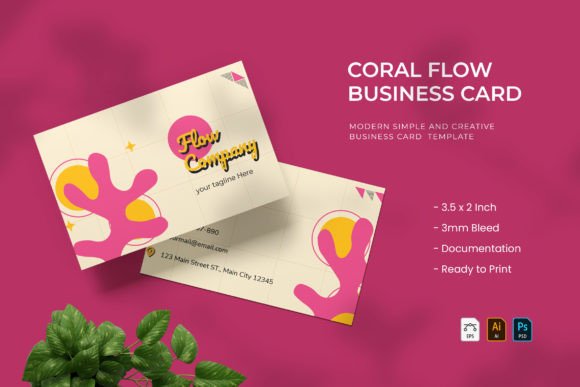
For a business card to look professional, its technical setup must meet print industry standards. The template in question is set up with the following specifications:
- Color Mode: CMYK. Unlike RGB, which is used for screens, CMYK (Cyan, Magenta, Yellow, Key/Black) is the standard for printing. Using a CMYK file prevents unexpected color shifts when the cards are printed.
- Resolution: 300dpi. This dots-per-inch measurement ensures that any raster images included in the design remain sharp and clear, avoiding pixelation when viewed at close range.
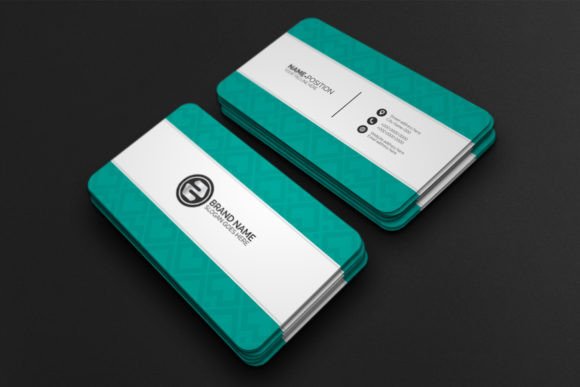
- Dimensions: Standard US size of 3.5 x 2 inches, with a mirrored 2 x 3.5 inch option. These are the most common sizes for networking events, ensuring compatibility with standard wallet holders and card readers.
- Vector Shapes: The use of vector graphics ensures that logos and geometric shapes remain crisp regardless of how much they are scaled. This is vital for maintaining logo integrity on the front and back of the card.
The package also includes a Help File, typically a PDF or text document, which guides users through the installation process, font substitution, and export settings. This support layer reduces the learning curve for those less familiar with desktop publishing software.
Benefits of Using a Customizable Template
The primary appeal of a Personal Business Card Template lies in its balance of speed and personalization. Below are the key advantages:
Cost Efficiency
Hiring a graphic designer for a simple business card can cost hundreds of dollars. Purchasing a single-use or multi-use template is a fraction of that cost. Additionally, because the template uses free fonts, there are no recurring licensing fees for typography.
Professional Polish
Templates are created by experienced designers who understand visual hierarchy, spacing, and alignment. Even if a user has limited design experience, modifying a well-structured template results in a cleaner, more balanced output than starting from scratch. The inclusion of paragraph styles and master pages ensures typographic consistency.
Flexibility Across Software
By providing files for both Illustrator and Photoshop, the template caters to different skill sets. Illustrators may prefer the vector-based editing of .AI files, while photographers or composite artists might find the raster capabilities of .PSD files more suitable for complex background treatments. The inclusion of EPS (Encapsulated PostScript) files further adds to the versatility, allowing for legacy compatibility or integration into other design suites.
Easy Customization
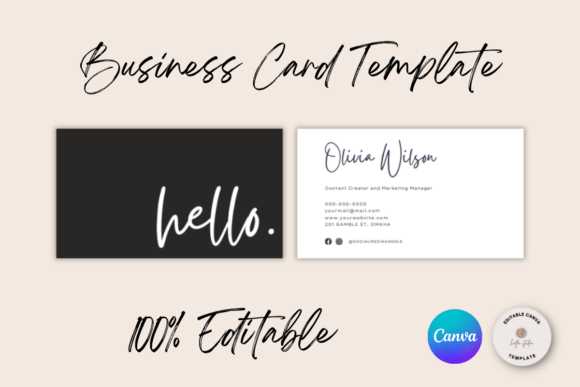
The "easy editable" nature of the file means that users can swap out text, change colors via swatches, and replace images without breaking the layout. The separate layers allow for non-destructive editing, meaning original design elements can be preserved while new content is added.
Considerations and Potential Tradeoffs
While the benefits are clear, there are factors to consider before purchasing or downloading a Personal Business Card Template.
Software Dependency
The template requires Adobe Creative Cloud applications (Illustrator, Photoshop, or InDesign). Users without access to this software suite will find the files unusable. While some alternatives exist, they may not support all features, particularly the IDML or layered PSD structures effectively.
Uniqueness vs. Familiarity
Because templates are sold to multiple users, there is a risk that another professional may have a similar design. If a brand relies heavily on distinctiveness, a template might feel too generic. However, extensive customization—changing colors, fonts, and imagery—can mitigate this issue significantly.
Learning Curve
Although labeled as "easy," editing vector files and managing bleed lines still requires a basic understanding of design principles. Beginners may struggle with concepts like clipping masks, linked images, and proper export settings for print, despite the inclusion of a help file.
Situational Fit: Who Should Use This?
This Personal Business Card Template is a strong fit for:
- Freelancers and Consultants: Individuals who need to produce cards quickly for networking events but want to avoid the delay and cost of hiring a designer.
- Small Business Owners: Entrepreneurs who need a cohesive brand identity across various materials and already use Adobe software for other tasks.
- Students and Entry-Level Professionals: Those building their portfolio and network who need affordable, high-quality marketing materials.
- Marketing Teams: Small teams that need to generate variations of business cards for different departments or roles without starting from zero each time.
Conversely, alternatives may be worth considering for:
- Non-Designers: Individuals uncomfortable with Adobe software might benefit more from drag-and-drop online builders like Canva, though these often lack the precise print controls (like CMYK conversion and bleed management) offered here.
- Brands Seeking High Uniqueness: Companies with strict brand guidelines requiring one-of-a-kind assets should invest in custom design services rather than shared templates.
Practical Decision-Making Insights
When evaluating whether to proceed with this template, consider your current workflow. Do you already have Adobe Illustrator or Photoshop installed? If yes, the transition will be seamless. Check if the provided free fonts match your brand voice. If the default fonts do not align with your aesthetic, ensure you have access to alternative free or licensed fonts that complement the template’s structure.
Additionally, verify your printing requirements. Since the template is set to 300dpi and CMYK, it is ready for professional offset or digital printing. If you plan to use an online printing service, simply upload the exported PDF with crop marks and bleeds. Avoid converting the file to RGB during the export process, as this will result in duller colors on the printed card.
Finally, think about longevity. A Personal Business Card Template is a one-time purchase for a reusable asset. Unlike hiring a designer once, you retain the source files indefinitely. This means you can update contact information, change job titles, or refresh the color scheme years later without additional cost. This reusability makes the template a sustainable investment for long-term professional growth.
Conclusion
A Personal Business Card Template offers a pragmatic solution for professionals seeking a balance between affordability, speed, and quality. With robust technical specifications including CMYK color modes, vector scalability, and comprehensive file formats like AI, PSD, and IDML, it supports a wide range of customization needs. While it requires familiarity with Adobe software and carries a minor risk of design similarity, the benefits of easy editing, professional polish, and cost efficiency make it a compelling choice for individuals and small businesses looking to present themselves stylishly and professionally.